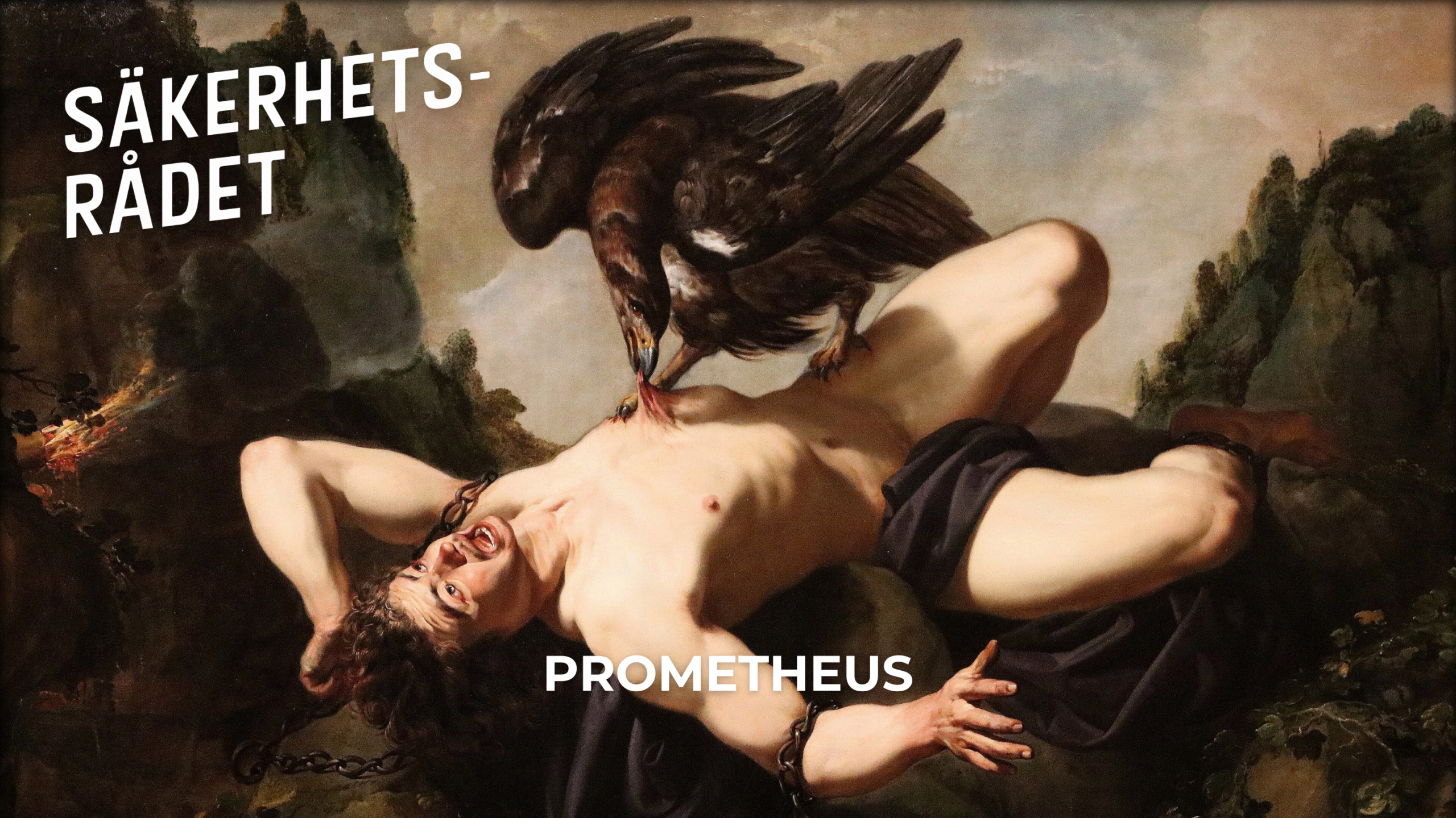
‘Prometheus’, the mythologised titan who brought fire to man, remains alive not just through the eternal punishment decreed by Zeus or various cinematic reimaginings, but via Russia’s systematic abductions and deportations of Ukrainian Children. In Sverdlovsk, 1200 kilometres from Ukraine, lies the ‘Prometheus’ camp – one of more than 200 camps across Russia which are keeping upwards of 35,000 Ukrainian children.
The ‘Prometheus’ camp brings fire to man too. In photos and videos published by Russian authorities, children are displayed in military fatigues, with rifles in hand, taking aim at targets. According to a recent report by Yale Humanitarian Research Lab (HRL), the children regularly perform different military drills, hand-to-hand combat, and grenade throwing – all overseen by members of Russia’s Federal Security Service. Mythologised for providing the gift of civilisation, Russia’s ‘Prometheus’ embodies its attempted destruction.
Russia’s campaign against Ukrainian children extends beyond militarisation. Children face re-education, ideological indoctrination, deletion of identity documents, and coercive adoption into Russian families. The latter was the case of the Russian Commissioner for Children’s Rights, Maria Lvova-Belova, who in 2022 adopted a 15 year old boy from Mariupol. The International Criminal Court did indeed issue arrest warrants for both her and Vladimir Putin in 2023. For Ukrainian children, however, nothing appears to have changed.
Putin, a de facto Chekist with imperial fantasies, seems to be using an old playbook, with known consequences. The USSR deported entire peoples, with Crimean Tatars forcibly expelled from their ancestral homeland in the 1940s, Chechens relocated en masse to Siberia and Central Asia, and Baltic populations shipped to labour camps following occupation. Children grew up far from where they came from; languages were threatened; cultures placed under systematic pressure to disappear. Today’s abductions and deportations are reminders of the risks of impunity and the urgency to act.
The systematic nature of Russia’s campaign is coming into sharper focus. Yale HRL recently revealed that the ‘Prometheus’ camp is under Gazprom’s ownership. Indeed, both Gazprom and Rosneft run an organised management structure of the camps, either owning or financially supporting the wider camp network through subsidiaries. As such, they are the first known Russian state-controlled corporate entities directly implicated in war crimes related to child deportation. While Gazprom and Rosneft are both comprehensively sanctioned by an array of actors, including the US and the EU, their subsidiaries, including the ‘Mednogorsk LU MG Gazprom Transgaz Ekaterinburg’ which keeps, arms, and trains the Ukrainian children at the Prometheus camp, have not. The flame in the Gazprom logo, once a beacon of light in the European energy partnership, has indeed morphed into the most twisted of symbols.
Critically, the methods applied to the deported children kept inside Russia reach into the temporarily occupied territories themselves. For the 1.6 million children living in these regions, an enforced Russian school curriculum has brought combat practice into daily life. The Kyiv Independent has documented how children are funnelled into paramilitary youth movements, where they are taught to dig trenches, handle weapons, and prepare for military service. For families who refuse, the consequences are unambiguous. For instance, Aishe Kurtamet recently told of her son Appaz, who at 19 was imprisoned for refusing to collaborate with occupation forces. He has since spent four years in a detention center in Pskov in Russia, convicted on fabricated terrorism charges.
Nonetheless, the fate of Ukrainian children is just the tip of an iceberg. Emerging in an immense scale is an ideological recasting of the Russian population. In ‘Mr Nobody Against Putin’, the Oscar winning documentary by Pavel Talankin, the school system is seen being reprogrammed in real time. Textbooks are rewritten to glorify the war, teachers are being monitored as they deliver Kremlin-approved lessons, and children are drilled in patriotic rituals celebrating the invasion. In many cases, military training finds its way into the schedule too.
The campaign against Ukrainian (and Russian) children reveals the core of the Kremlin’s agenda. Putin, paraphrasing the nationalist Prussian General Bismarck in 2023, said “Wars are not won by generals, but by schoolteachers and parish priests.” Critically, while Ukraine and its allies have stalled Putin’s military campaign, the ideological war is perhaps overlooked. Russia has increased its federal youth policy budget by 66% since 2022, while Western countering efforts have seen its largest sponsor, the US, dramatically cut its humanitarian funding.
Europe must do more to confront Russia’s campaign against Ukrainian children. Initiatives which policymakers should prioritise now include:
Sanctions & Legal
- Sanction the subsidiaries – The Gazprom and Rosneft parent companies are sanctioned, while their subsidiaries operate freely. This gap must be closed immediately.
- Widen the scope of Magnitsky-style sanctions – These exist but have not been applied to those directly running the child deportation system. Yale HRL’s March 2026 report alone identified 44 implicated entities, like camp administrators, FSB officers, and judges – 80% which remain unsanctioned.
- Pressure Interpol to act – Ukrainian courts have convicted Russian officers of war crimes, yet Interpol refuses to pursue these cases, citing reputational risks from involvement in an active conflict. This allows perpetrators to move freely across Europe. Sweden and its partners must pressure Interpol to act, and prepare domestic legal mechanisms as a backstop.
Economic
- Fund the fight – Russia has increased spending on patriotic education tenfold since 2022, while the US has cut its aid by 74% in 2025. Ukraine’s partners need to step in and back organisations that support the counter-narrative infrastructure.
- Put frozen assets to work – Of the 〜€300 billion in Russian sovereign assets which sit in frozen in European accounts, a portion should be explicitly directed toward child repatriation and rehabilitation.
Humanitarian
- Build a civilian exchange mechanism – Current prisoner exchanges cover combatants, while civilians like Appaz Kurtamet fall outside these frameworks entirely. Europe must push for a dedicated diplomatic mechanism for civilian hostages, distinct from military POW negotiations.
- Build a repatriation machine – Of tens of thousands of documented abductions, just over 1,300 children have been returned. Europe needs a dedicated, funded, and institutionalised repatriation mechanism.
- Rehabilitate and reintegrate – Children returning from Russia’s re-education system carry the weight of deliberate, state-administered indoctrination. Latvia has pioneered rehabilitation programmes; Europe must build on what works and scale it across the continent.
Advocacy & Awareness
- Platform families – Testimonies makes the statistics human. Further support should be provided to organisations that bring families and repatriated to parliaments, media, and policy forums across the continent.
In the myth, Prometheus is eventually liberated as Hercules arrives to break the chains. In reality, however, much more needs to be done to secure the freedom of Ukraine’s children.
This article was originally published on Victor Blomberg’s Substack.